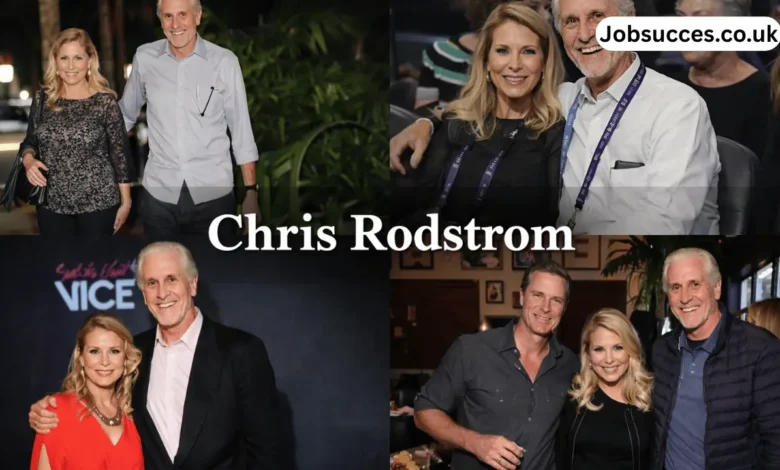
There’s something rare about a person who chooses influence over attention. chris rodstrom never chased headlines, never tried to build a public persona off her husband’s fame, and never competed with the spotlight that followed Pat Riley for decades. And yet, if you look closely at Riley’s consistency, discipline, and longevity, you’ll see the quiet architecture of chris rodstrom holding it all together.
She didn’t build her life around basketball. She built it around stability, psychology, and emotional intelligence. That difference matters.
A Life Rooted in Psychology, Not Celebrity
Before becoming known as Pat Riley’s wife, chris rodstrom was building something substantial on her own. Raised in Maryland in a structured, service-oriented household, she grew up with discipline woven into daily life. Her father served in the U.S. Navy. Her mother worked in healthcare. That environment shaped her sense of responsibility early on.
She studied psychology and later earned a master’s degree in educational psychology from California State University. This wasn’t a decorative degree. chris rodstrom worked as a licensed therapist and marriage counselor, helping people navigate conflict, identity, and emotional strain.
That background changes how you understand her role later in life.
When your partner operates in high-pressure environments like the NBA — coaching championship teams, managing egos, facing public criticism — emotional steadiness becomes more than a personality trait. It becomes infrastructure. chris rodstrom had the training and temperament to understand performance stress from the inside out.
And unlike celebrity spouses who lean into publicity, chris rodstrom stepped away from full-time professional practice once family life demanded more attention. That decision wasn’t retreat. It was prioritization.
Meeting Pat Riley Before the Spotlight Intensified
chris rodstrom met Pat Riley in the late 1960s in San Diego. At that time, Riley was a professional basketball player, not yet the championship coach or executive who would define eras with the Los Angeles Lakers and Miami Heat.
They married in 1970.
That timeline matters because chris rodstrom wasn’t drawn to a finished legend. She was there before the myth formed. She experienced the uncertain years, the player transitions, the coaching pivot, and the intense media glare that arrived during the Showtime Lakers era.
By the time Riley became synonymous with sideline intensity and tailored suits, chris rodstrom had already built decades of shared life with him. That kind of foundation changes how power is handled inside a marriage.
The Emotional Counterweight to an Intense Public Figure
Pat Riley’s public image is sharp, controlled, demanding. His reputation rests on discipline, structure, and relentless standards. What doesn’t get discussed as often is the emotional decompression required behind closed doors.
That’s where chris rodstrom mattered most.
A trained psychologist living with a hyper-competitive NBA figure creates a fascinating dynamic. She understood ego, ambition, and pressure cycles in ways that went beyond surface-level support. chris rodstrom wasn’t simply “standing by her man.” She was equipped to interpret the psychological toll of elite competition.
There’s a reason Riley has spoken about stability at home. Long-term success at that level rarely survives without it.
You don’t coach multiple championship teams across decades without emotional anchoring somewhere. chris rodstrom provided that anchor.
Choosing Privacy in a Fame-Driven Culture
In an era where proximity to fame often turns into branding opportunities, chris rodstrom chose invisibility. No media circuits. No personal publicity campaigns. No leveraging the Riley name for attention.
That restraint feels almost radical today.
She attended events when appropriate but never positioned herself as a co-star in Riley’s narrative. The public sees Pat Riley as the architect of championship cultures. Insiders understand that chris rodstrom maintained the culture at home.
That difference isn’t cosmetic. It’s structural.
Couples who survive decades in high-profile industries usually share one trait: one partner absorbs the chaos so the other can operate publicly. chris rodstrom embraced that role without complaint or self-promotion.
Building a Family Away from the Arena
chris rodstrom and Pat Riley adopted two children: James Patrick and Elisabeth. Adoption wasn’t a publicity gesture. It was a private family decision, handled with the same discretion that defines the rest of her life.
Raising children while one parent operates in professional sports is complex. Seasons are long. Travel is relentless. Media pressure can intrude without warning.
chris rodstrom created a consistent domestic environment during years when Riley’s career required geographic shifts and public scrutiny. That stability matters more than championship rings.
Children don’t remember press conferences. They remember presence.
By all accounts, chris rodstrom prioritized her children’s privacy and normalcy, resisting the temptation to expose family life for image-building. That boundary protected her family in a way that feels increasingly rare.
The Strength in Stepping Back
It’s easy to misread a private life as a passive one. That would be a mistake.
chris rodstrom stepped away from full-time psychological practice to focus on her family during critical career years for Riley. But stepping back professionally does not equal losing identity.
In fact, her training likely shaped family decisions, communication patterns, and long-term planning. The ability to understand emotional regulation and interpersonal conflict becomes invaluable in households tied to competitive industries.
There’s also something powerful about someone who doesn’t need constant external validation. chris rodstrom built her credentials before fame entered her orbit. She didn’t depend on it afterward.
That independence creates a different kind of partnership — one rooted in mutual respect rather than dependency.
Philanthropy Without Performance
The Rileys have participated in philanthropic efforts over the years, particularly in healthcare and community initiatives. chris rodstrom’s background in psychology and healthcare-adjacent family upbringing aligns naturally with that involvement.
What stands out is the absence of spectacle.
There’s no personal branding campaign around charity work. No curated social media storytelling. The approach reflects her broader philosophy: impact over image.
In a culture where charity often doubles as marketing, chris rodstrom keeps the emphasis where it belongs — on the cause, not the applause.
Longevity Isn’t Accidental
More than five decades of marriage in professional sports is not luck. It’s design.
chris rodstrom and Pat Riley married in 1970. That’s a lifetime of seasons, career pivots, relocations, championships, losses, and reinventions. Most high-profile marriages don’t survive that level of pressure.
Longevity requires adaptation. It requires ego management. It requires knowing when to speak and when to stay silent.
Given her professional background, it’s hard not to see how chris rodstrom’s psychological insight contributed to that endurance. She understood communication patterns and emotional blind spots long before those concepts became mainstream self-help themes.
And perhaps most importantly, she never competed with Riley’s ambition. She complemented it.
Why chris rodstrom’s Story Resonates Now
There’s a cultural shift happening around how we define influence. For years, visibility equaled importance. Now there’s renewed respect for builders behind the scenes.
chris rodstrom represents that model.
She built a career grounded in understanding people. She sustained a marriage in one of the most demanding industries in America. She raised children outside the glare of fame. She supported a man whose professional intensity could easily have overwhelmed domestic life.
That’s not secondary work. That’s foundational work.
In a world obsessed with front-stage performance, chris rodstrom proves that backstage leadership can shape history just as effectively.
The Quiet Architecture of Success
Strip away the championship banners and executive titles, and you’re left with something simpler: a partnership that worked.
chris rodstrom didn’t chase attention, and that may be exactly why her influence endured. Stability isn’t loud. It doesn’t trend. But it holds everything up.
If there’s a lesson in her story, it’s this: real power doesn’t always announce itself. Sometimes it builds the room and lets someone else speak.
That kind of strength rarely makes headlines. It shapes legacies instead.
FAQs
1. Did chris rodstrom continue practicing psychology after marrying Pat Riley?
She worked as a licensed therapist early in her career but stepped away from full-time practice to focus on family life as Riley’s coaching responsibilities intensified.
2. How long have chris rodstrom and Pat Riley been married?
They married in 1970, marking more than five decades together through multiple phases of Riley’s NBA career.
3. Do chris rodstrom and Pat Riley have biological children?
They adopted two children, James Patrick and Elisabeth, and raised them largely outside public exposure.
4. Is chris rodstrom active in public media or social platforms?
No. She maintains a low public profile and has consistently avoided media attention and personal publicity.
5. What makes chris rodstrom’s role in Pat Riley’s life significant?
Her background in psychology, commitment to privacy, and long-term emotional support created stability that allowed Riley to sustain success across decades in professional basketball.
You May Also Read: Deborah Dubois: The Private Woman Behind One of America’s Most Notorious Crime Stories