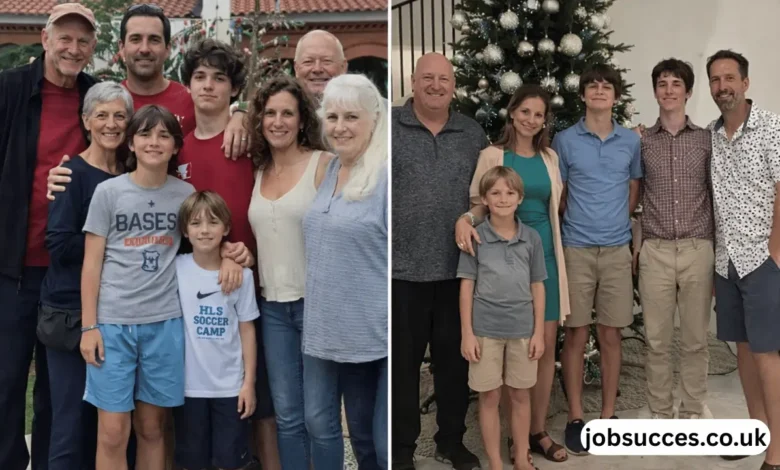
People pretend they want honesty from media figures, but the reaction to the clay travis family tragedy shows that what they really want is drama trimmed to fit their own expectations. When grief doesn’t arrive wrapped in scandal or spectacle, it gets distorted, exaggerated, or outright invented. That distortion says more about the audience and the media ecosystem than it does about Clay Travis himself.
The clay travis family tragedy has been framed online in ways that range from careless to intentionally misleading. The facts are public, limited, and emotionally grounded. The noise around them is not.
Public grief without permission slips
Clay Travis has never positioned himself as a figure who asks for sympathy. His brand has always been blunt, sometimes confrontational, and unapologetically public-facing. That makes the reaction to the clay travis family tragedy especially revealing.
When Travis spoke openly about the death of his stepfather-in-law, it wasn’t a media rollout. It was a personal acknowledgment of loss. He described the role this man played in his family and in the early encouragement behind building OutKick. The moment was human, restrained, and specific.
That should have been the end of it. Instead, the phrase clay travis family tragedy took on a life of its own across blogs and social media accounts that thrive on ambiguity. The lack of sensational detail became an invitation for speculation.
What actually happened, stripped of exaggeration
The core facts tied to the clay travis family tragedy are narrow. There was the passing of a stepfather-in-law, a man Travis credited as supportive and influential. Later, Travis also spoke publicly about the sudden death of his cousin, Steve Travis, at age 62. Both losses were acknowledged directly by Travis himself.
There were no hidden scandals. No accidents involving his immediate family. No incidents concerning his wife or children. Yet the language used online often implied something far darker, leaning on the emotional weight of the word tragedy while refusing to specify what occurred.
That vagueness is not accidental. It fuels clicks.
How the internet manufactures weight from absence
The clay travis family tragedy became a case study in how online narratives grow without substance. When readers search that phrase, they are often met with articles that promise revelation and deliver none. The structure is familiar: emotional headlines, recycled biographical details, and a careful refusal to clarify the actual loss.
This approach relies on a simple trick. By not lying outright, publishers avoid accountability. By not being clear, they allow readers to imagine something worse. It is grief as a suggestion rather than a fact.
This is not about protecting privacy. It is about exploiting uncertainty.
Why Travis’s silence is misread as secrecy
Clay Travis does not perform vulnerability for approval. That choice matters in how the clay travis family tragedy has been misinterpreted. In an era where public figures are expected to narrate their pain in real time, restraint gets framed as avoidance.
Travis acknowledged his losses. He honored the people involved. He then returned to his work. That pattern clashes with an online culture trained to expect prolonged emotional exposure.
The refusal to keep explaining himself created a vacuum. Others rushed to fill it.
Ranking the real impact versus the invented narrative
If the clay travis family tragedy is judged by actual impact on Travis’s public life, it ranks lower than the internet insists. His career trajectory did not change. His public commentary did not pivot toward grief-driven branding. There was no monetization of loss.
What did change was how aggressively unrelated outlets used the phrase to frame him. In that sense, the manufactured narrative mattered more than the loss itself.
The tragedy became less about family and more about leverage.
The ethical line media keeps crossing
There is a difference between reporting a death and turning it into a floating headline detached from reality. Coverage around the clay travis family tragedy often crossed that line by refusing to anchor the story in concrete detail.
This isn’t a neutral failure. It’s a choice. Writers know that clarity reduces emotional payoff. They also know that ambiguity keeps readers scrolling.
The cost of that choice is borne by real people who did not ask to become narrative devices.
Why readers should be skeptical by default
Anyone encountering the phrase clay travis family tragedy should pause before accepting the framing. Ask what is being described. Ask who confirmed it. Ask why the article avoids specifics.
In this case, skepticism is not cynicism. It is accuracy.
The confirmed events are human, limited, and understandable. Everything beyond that is noise.
The larger pattern this story exposes
The clay travis family tragedy is not unique. It fits a pattern where public figures with polarizing opinions become easy targets for emotional inflation. Grief becomes a tool to soften, attack, or reframe someone depending on the outlet’s agenda.
What makes this case stand out is how little raw material existed to justify the coverage. The tragedy was real. The amplification was not.
That imbalance should concern anyone who values factual storytelling.
Why this narrative persists
The phrase clay travis family tragedy continues to circulate because it satisfies multiple incentives at once. It attracts curiosity. It avoids legal risk. It signals emotional depth without requiring reporting.
As long as those incentives exist, similar stories will keep appearing, not just about Travis, but about anyone whose name draws attention.
The only effective counterweight is reader discipline.
A clearer way to talk about loss
Loss does not need embellishment to matter. The deaths acknowledged by Travis were meaningful because of the relationships involved, not because of how they could be framed online.
If the clay travis family tragedy teaches anything, it is that restraint is often more honest than exposure, and clarity is more respectful than suggestion.
The story was never as big as the internet wanted it to be. That is precisely why it should be told accurately, or not at all.
Conclusion
The clay travis family tragedy reveals a blunt truth about modern media: grief is no longer just experienced, it is processed, packaged, and sold. Travis handled his losses without theatrics. The internet responded by inventing weight where none existed. Readers who want better information have to demand better behavior, starting with refusing to reward ambiguity dressed up as concern.
FAQs
1. What prompted public discussion around the clay travis family tragedy in the first place?
It began with Travis publicly acknowledging the death of his stepfather-in-law and later his cousin, both shared in his own words.
2. Why do so many articles avoid explaining details?
Because vague emotional framing attracts attention while avoiding the responsibility of precise reporting.
3. Did the tragedy involve Clay Travis’s wife or children?
No credible or confirmed information supports that claim.
4. Has Clay Travis addressed misinformation directly?
He has not engaged extensively with rumors, choosing instead to acknowledge his losses and move forward.
5. Why does this topic keep resurfacing online?
Because emotionally charged phrases perform well in search results, even when the underlying facts are limited.
You May Also Read: Declan Mone: Career, Business Roles, and Private Profile